GVBOT Welcomes Competitiveness Reforms, Calls for Stronger Labour Stability Measures
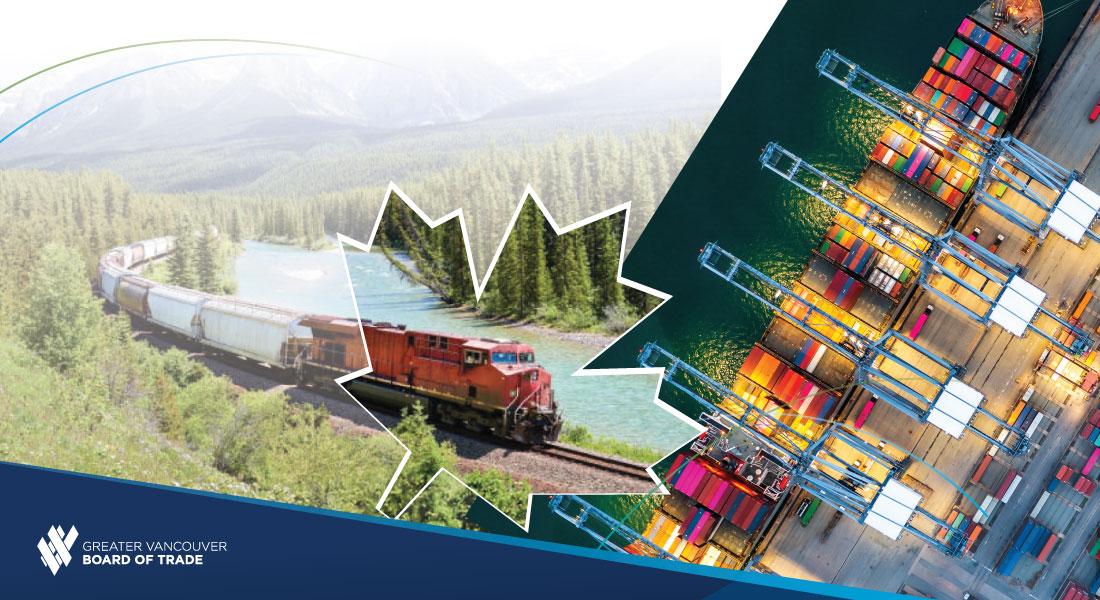
VANCOUVER, B.C. — The Greater Vancouver Board of Trade welcomes key elements of the federal government's new legislation, Bill C-39 (Building Canada Strong Act), particularly its focus on economic competitiveness, nation-building infrastructure, and trade corridors. The reforms would help accelerate project approvals, strengthen supply chains, and provide greater certainty for infrastructure investment; however, the legislation's labour stability measures fall short of what is required to promote stability in federally regulated sectors.
Meeting the Moment on Economic Competitiveness
The Board of Trade strongly supports the legislation's economic competitiveness provisions. The proposed reforms would streamline project reviews, improve coordination across federal permitting processes, establish clearer approval timelines, and create new mechanisms to accelerate nationally significant infrastructure and trade-enabling projects. The legislation also creates a stronger framework for coordinating major transportation investments and trade infrastructure across Canada.
"Canada is facing a defining economic moment. As countries around the world compete for investment, talent and supply chain opportunities, Canada cannot afford regulatory processes that are slow, fragmented and unpredictable. These reforms recognize that economic growth, trade infrastructure and major projects are national priorities. This legislation meets the moment by focusing on how Canada can build faster, attract investment and strengthen its economic competitiveness." - Bridgitte Anderson, President and CEO, Greater Vancouver Board of Trade
The Board of Trade has consistently called for measures that reduce delays, improve certainty, and accelerate projects that strengthen Canada's economic capacity. These reforms represent an important step toward achieving those objectives.
Labour Stability Measures Fall Short
While the Board of Trade welcomes efforts to improve labour stability through new mediation tools and dispute resolution mechanisms, it believes the legislation falls short of what is required for nationally significant federally regulated sectors. The GVBOT has repeatedly highlighted the economic consequences of disruptions affecting ports, aviation, railways, and other critical transportation systems. Canada's supply chains are essential national infrastructure, and disruptions can have significant consequences for workers, businesses, exporters and consumers across the country.
"We appreciate the government's recognition that labour stability is a competitiveness issue, but these measures fall short of what is required for nationally significant sectors such as ports, rail, aviation, and transportation. When critical trade infrastructure is disrupted, the impacts are felt across the entire Canadian economy. West Coast ports move $1.1 billion in cargo while supporting more than 150,000 jobs. Our national security and economic sovereignty require us to diversify our trade and winning those new customers requires us to be a reliable partner." - Bridgitte Anderson, President and CEO, Greater Vancouver Board of Trade
While the proposed amendments to section 107 provide government with a more structured framework for intervention when labour disputes threaten the national interest, intervention remains discretionary and may only occur after significant economic harm has already begun. The legislation stops short of establishing a dispute resolution mechanism capable of preventing avoidable disruptions of nationally significant industries where the national interest is harmed, and the parties are at an impasse.
Positively, the legislation incorporates recommendations from the Vince Ready- Amanda Rogers Industrial Inquiry Commission, including geographic certification provisions and a special mediation framework. These are common sense proposals that were supported by the Commission’s report.
Port Governance Reform and Trade Corridors
The Board of Trade also welcomes the legislation's completion of the port governance modernization agenda first advanced through legislation in past parliaments.
The legislation preserves reforms related to governance oversight, transparency, Indigenous and community engagement, security requirements, land-use planning, climate reporting and marine traffic management. We are pleased that the new legislation reinforces the view that ports are strategic national assets central to Canada's economic future. Importantly, the legislation extends beyond individual ports by creating a broader trade corridor approach that links ports, railways, highways and other trade infrastructure within a nationally coordinated framework.
"We support the continued modernization of Canada's port governance framework and strongly welcome the focus on trade corridors and the broader recognition of the economic development role of our ports. Goods do not move through ports alone. They move through integrated networks of rail, road, terminals, and border infrastructure. A corridor-based approach better reflects how Canada's economy actually functions and can help improve reliability across the entire supply chain." - Bridgitte Anderson, President and CEO, Greater Vancouver Board of Trade
The Greater Vancouver Board of Trade appreciates the federal government’s efforts to strengthen Canada's competitiveness, improve supply chain resilience, and ensure Canada's trade gateways remain reliable engines of economic growth
-30-
About the Greater Vancouver Board of Trade:
Since its inception in 1887, the Greater Vancouver Board of Trade has been recognized as Western Canada's leading business association, engaging our members to inform public policy at all levels of government and empowering them to succeed and prosper in the global economy. With a Membership whose employees comprise one-third of B.C.'s workforce, we are the largest business association between Victoria and Toronto. We leverage this collective strength, facilitating networking opportunities, and providing professional development through unique programs. In addition, we operate one of the largest events platforms in the country, providing a stage for national and international thought leaders to enlighten B.C.'s business leaders.
Media contact:
Federico Cerani
Communications Manager
Greater Vancouver Board of Trade
604-640-5450 | media@boardoftrade.com